
Title: An Insight of Mercury-Free Products in India
Publication Type: Research Reports
Year of Publication: 2021
Abstract:This study is an indication on the overall status of the mercury-free alternative products in India. It was found that in some of the sectors like health care and lamps, India has made considerable progress in shifting to the alternative products. However, the cost and quality of the products are the major concerns for India considering the wide diversity of the socio-economic class of people living in the country. Further information on the health hazards of mercury is low among the consumers, traders, manufacturers and the workers as well.Another important aspect of the study is that the domestic demand for mercury and mercury-free products are largely met with the import from China. Incidentally the study also reflected that with the ban on export of mercury products from China, business is getting affected particularly of health care instruments like thermometer and sphygmomanometer. Nevertheless, there are industries which are manufacturing mercury-free products in India and with suitable policy and government handholding India can become a manufacturing hub for the mercury-free products. Therefore, it’s the right time for the government to assess the current scenario and act accordingly to make it a mercury-free country and also emerge as a manufacturing hub for mercury-free products.
Suggested Readings
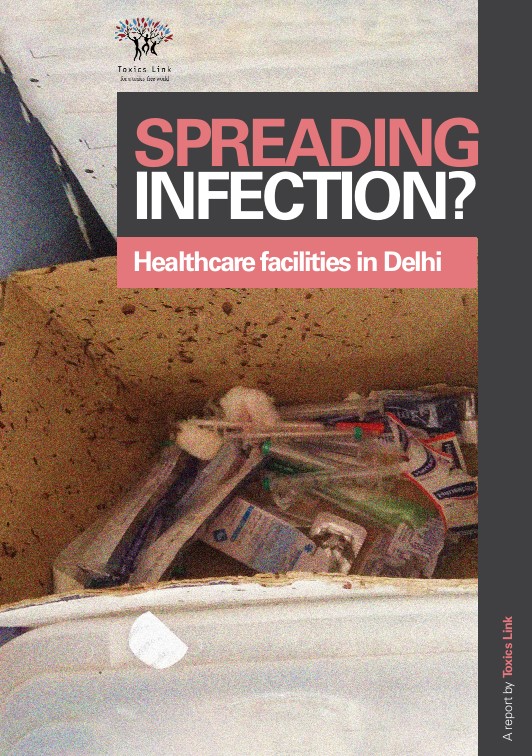
Spreading Infections? Healthcare Facilities in Delhi
The objective of the study was to assess the current status of Bio medical waste management in Delhi. Though the study looked only at bedded health care facilities, it was clear that this infectious waste, even after almost 20 years of the Rules, is not fully implemented on ground. Though the practices and processes in larger healthcare establishments seemed in compliance with the Rules, the systems in hospitals or nursing homes of smaller sizes were lacking in many aspects. The study has not included clinics or non-bedded facilities, but our observation of the few clinics we visited and interviews of some key stakeholders seemed to suggest that most clinics are not in compliance with the Rules and many of them, in fact, have not even tied with the CBWTFs. One of the major shortcomings is that database of HCFs pertaining to BMWM was neither available online on official website of DPCC nor provided when asked through the medium of multiple RTIs. Non-availability of this data leads to apprehension, as well as is limiting factor to any agenda associated with ensuring the compliance of BMW rule in Delhi.
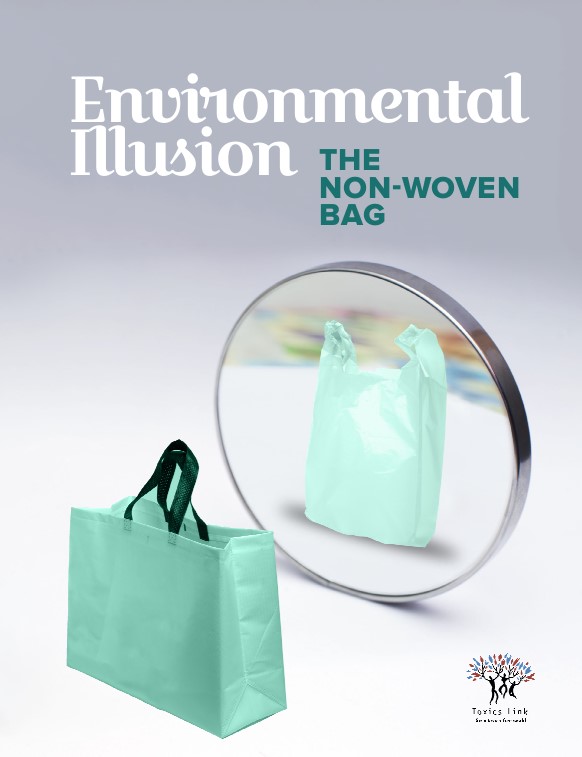
Environmental Illusion: The Non-Woven Bags
The look and feel of the non-woven bags have made people believe that they are made of cloth and therefore environment-friendly.This is far from the truth.The lab findings, which were a part of this study, clearly show the plastic content in the popularly distributed non-woven bags- thus breaking the myth that these bags pose no harm to the environment.Lack of correct information or misleading information is leading most vendors to use plastic (non-woven PP) as replacement for normal plastic- and ironically paying more for it.The industry though continues to assert that NWPP bags are the best alternative to polythene or regular plastic bags, citing their durability and also claiming that they are environment-friendly.Though some local and regional government agencies have explicitly admitted that NWPP bags are not the right choice, there is still lack of clarity on the issue.Consumer awareness and behaviour change programmes still remain key elements and various agencies have to work towards informing and educating the consumers regarding the reality of non-woven bags.
What’s in the Diaper? Presence of Phthalates in Baby Diapers
The study is an attempt to get an overview on the presence of phthalates in diapers in the Indian context. The study has also established that most of the diapers contain phthalates like DEPH and DBP which are well-known endocrine disruptors. The sample TL-D 16 hasthe highest concentration of DEHP, DBP and total phthalates of 8.2 -302.25 PPM, which is notably higher than the recent published studies by Ishi et al 2015 on DEHP (0.1-0.6 ppm) and DBP (0.1-0.2 ppm) in baby diapers available in Japan and Park et al 2019 of the level of DEHP (0.01-0.06 ppm) and DBP (0.01-0.16 ppm) in diapers in Netherlands. Incidently most of the samples studiedin India have high phthalate levels than the available global studies conducted on phthalates in diapers. Therefore the present study raised concerns on the quality of the products available in the Indian market and also the possible unimaginable risks that these products can pose to children. Moreover due to lack of a suitable disposal mechanism in place, diapers mostly end in the landfills or the surrounding open spaces of our neighbourhoods.As the diapers contain high level of phthalates, there is every possibility that these phthalates are being leached out to the surrounding environment and impacting the overall ecosytems including the ground water. And this can pose huge health hazards to the surrounding community as well.